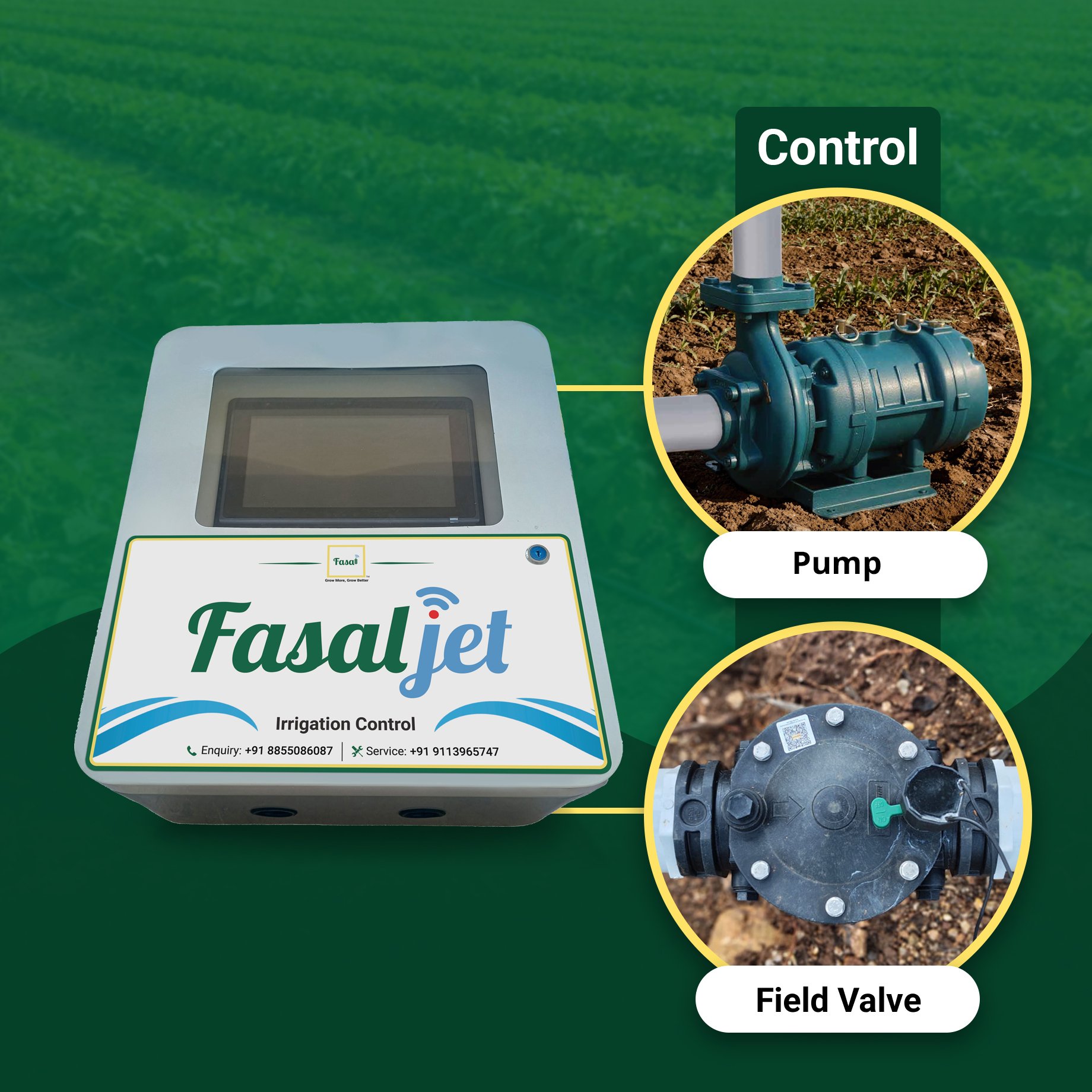
One of the biggest limitations of fixed irrigation schedules is that field conditions change. A schedule created at the beginning of a crop cycle may not remain suitable throughout the season. Rainfall, temperature, soil characteristics and crop growth can all influence water requirements.This is why modern
smart irrigation increasingly combines automation with field-level information. A soil moisture sensor, for example, can provide information about conditions around the root zone. When this information is considered alongside crop stage and weather conditions, farmers have a better basis for managing irrigation.
Automation also becomes more useful when a farm has multiple irrigation zones. An
irrigation controller can coordinate different cycles, while automated valves can manage individual sections. Instead of manually operating every valve, farmers can manage irrigation according to the requirements of different plots.
There is another important part of irrigation management: fertigation. On farms where fertilizers are delivered through drip irrigation, water and nutrients need to be coordinated. FasalJet Pro brings
irrigation automation and fertigation automation together, with capabilities for fertilizer dosing, EC monitoring and pH management.
Real farm conditions also need to be considered. Power interruptions, for example, can stop an irrigation or fertigation cycle midway. FasalJet Pro includes power-failure alerts and an auto-resume feature designed to continue an interrupted cycle once power is restored.
The purpose of automation, however, is not to remove the farmer from the decision-making process. Farmers still understand their fields, crops and local conditions better than any system. Technology can instead handle repetitive operations and make useful information easier to access.This is the broader idea behind precision agriculture: using data, sensors and automation where they can solve genuine problems on the farm.For Fasal, irrigation automation is therefore not just about controlling a pump remotely.
It is about connecting field data, irrigation, fertigation and farm operations into a system that helps farmers manage everyday work with greater visibility and control.The best automation is not necessarily the system with the most features. It is the one that addresses a real farm problem and makes the farmer's daily work easier.
.svg)