The importance of this becomes clearer with drip irrigation. Drip systems deliver water close to the roots, but irrigation requirements can still change depending on soil type, weather, crop stage and recent rainfall. Following the same irrigation schedule throughout the season may therefore result in watering when the soil already has sufficient moisture or delaying irrigation when the field needs it.
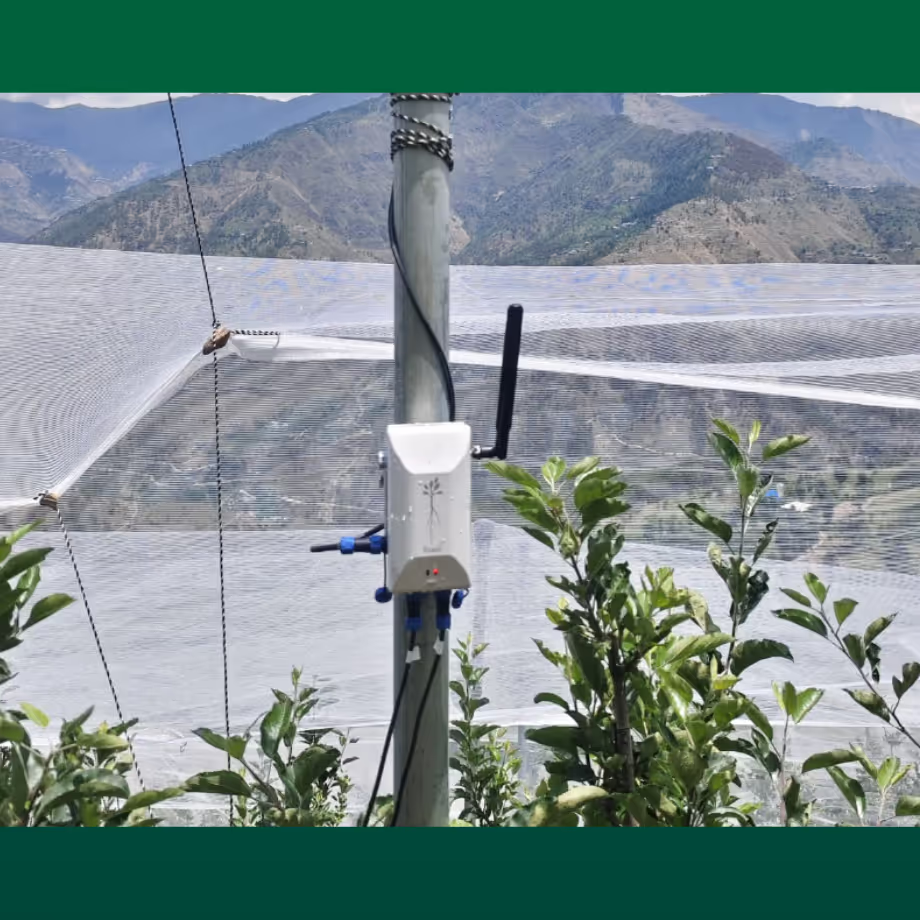
Soil moisture sensor help to monitor moisture changes through mobile phones. Farmers can observe how moisture levels respond after irrigation, how quickly the soil dries and how conditions change during different stages of crop growth. Over time, this information can help create a better understanding of the relationship between irrigation and crop requirements.
However, a soil moisture sensor should not be treated as a device that makes every irrigation decision by itself. The right interpretation depends on factors such as crop type, root depth, soil characteristics, weather and the stage of crop growth. The sensor provides the information; agricultural knowledge provides the context.
The bigger opportunity comes when
soil moisture sensor is connected with irrigation automation system. Instead of simply collecting data, the information can become part of a broader irrigation management system. This allows farmers to combine field observations with automated control and reduce some of the repetitive work involved in irrigation.
At Fasal, this combination of field intelligence and automation is central to the approach to
precision agriculture. Fasal's sensing solutions provide information such as soil moisture and soil temperature, while its automation systems can help farmers manage irrigation operations remotely.
For farmers considering a soil moisture sensor, the most important question isn't simply
“How accurate is the sensor?” It is
“Can the information help me understand my field better and make better irrigation decisions?”
That is ultimately where soil moisture monitoring becomes valuable—not as a replacement for farming experience, but as another layer of information that can make irrigation management more informed and precise.
.svg)