Not Every Farm Needs the Same Technology
The right approach to farming automation starts with identifying where the real difficulty lies. For a grower spending too much time operating pumps and valves manually, irrigation automation may be the priority. For a farm applying fertilizer through drip irrigation, fertigation automation can help manage the operation according to a planned nutrient programme.
Other growers may need better information about field conditions. A
soil moisture sensor measures moisture, while a weather station provides local weather information, irrigation advisories, disease advisories, spraying advisories. These are monitoring technologies, separate from automation: they provide information rather than defining how irrigation is controlled.
Recognising these differences helps farmers invest in capabilities that address actual problems instead of collecting features they may not need.
How Fasal Approaches the Problem?
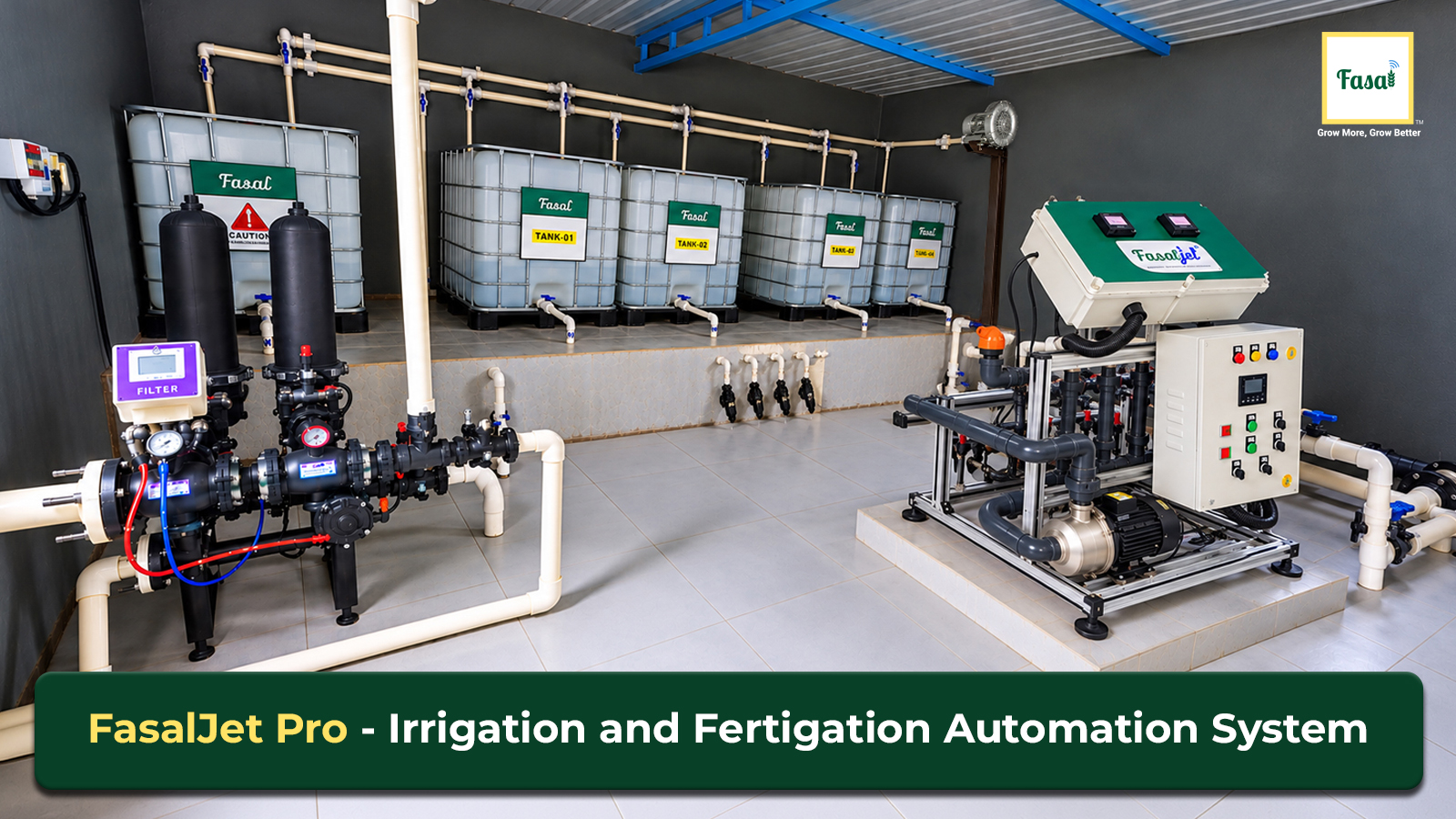
FasalJet is designed to make irrigation operations easier to manage. Farmers can start, stop, and schedule irrigation through a mobile app. The system supports auto and manual modes, auto resume feature, and remote control of decentralised drip valves through RTU without requiring those valves to be centralised.For farms that also need to manage fertilizer application, FasalJet Pro supports irrigation and fertigation automation. Depending on configuration, its capabilities can include fertilizer injection, EC monitoring, and pH control through acid dosing.Fasal also offers separate monitoring products.
Main Unit 5.0 provides weather and irrigation advisory, disease advisory, spraying advisory, while Soil Moisture Unit 6.0 provides soil moisture and soil temperature information on farmers mobile. These products address monitoring needs independently of automation.
Explore FasalJet irrigation automation or
FasalJet Pro fertigation automation.
Start With One Question: What Is Taking Up Your Time?
Before choosing farm automation systems, look at the tasks that repeatedly interrupt your day. Is it an operating irrigation system? fertigation? Or making decisions without enough information about field conditions?That answer should guide the technology you choose.
Drip Automation won't eliminate the need to inspect crops or make sound agronomic decisions. But it can help reduce the operational burden of tasks that don't always require someone to be physically present. A farm becomes easier to manage when technology fits the way work actually happens in the field. The starting point isn't automating everything. It's identifying the right task to automate first.
Explore
Fasal to find irrigation automation, fertigation automation, and field-monitoring solutions suited to different farm management needs.